Meridian Temple City ConcreteMeridian Temple City Concrete(323) 471-6288

Concrete contractor in Glendale, CA - driveways and walks built for older homes

Meridian Temple City Concrete pours driveways, patios, walks and slabs for homeowners in Glendale, CA. We're based in Temple City, and our own small crew handles the careful jobs here too, like footings, steps and concrete cutting.

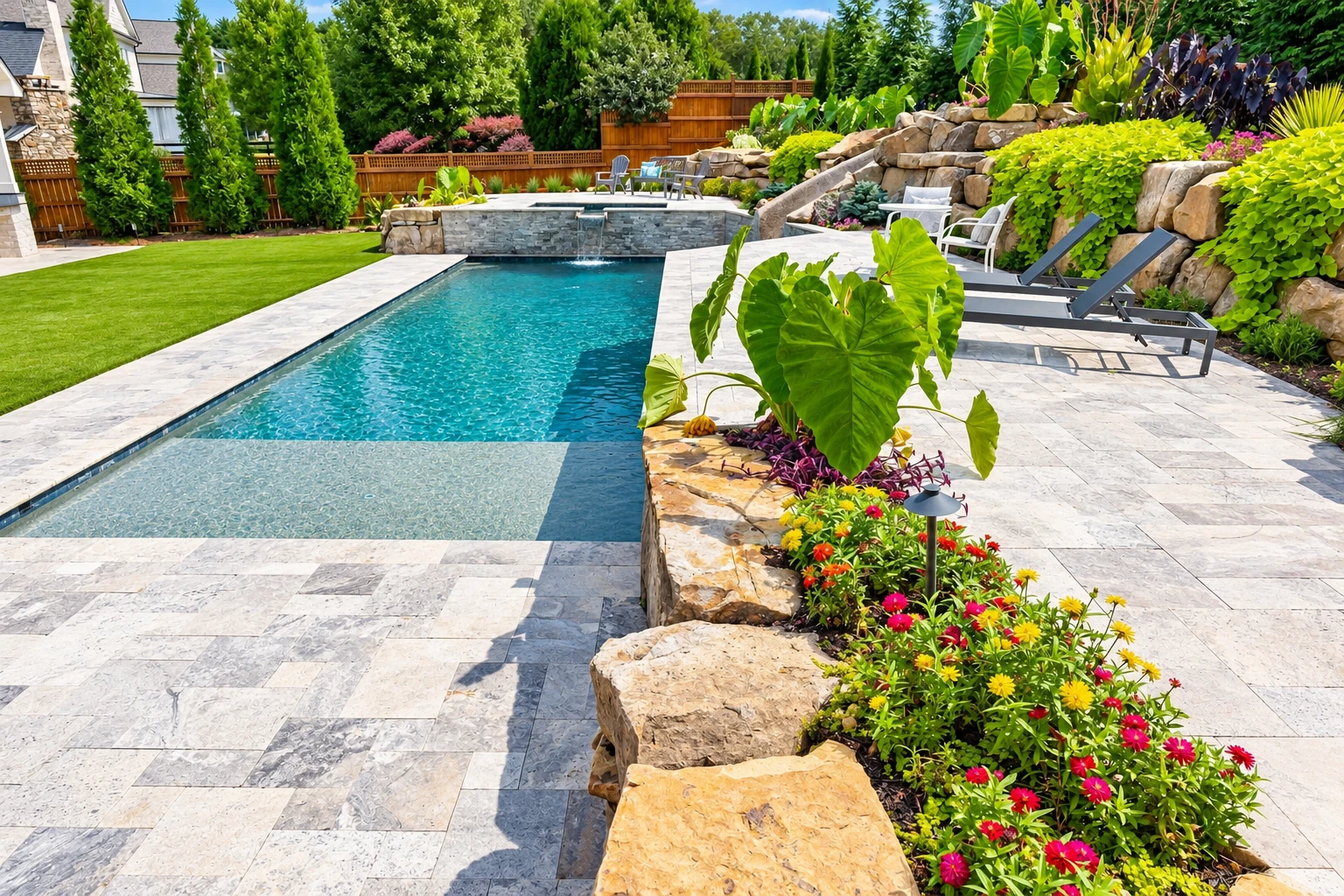
Stone-pattern concrete pool deck beside a rectangular pool, with raised rock landscaping and colorful flower beds.

Glendale homes, from older streets to the foothills

Glendale is its own big city just west of Pasadena, with a lot of older neighborhoods in it. Many of the older homes are Period Revival styles such as Spanish Colonial Revival, Tudor Revival and French-inspired designs, and the north end of the city climbs into the foothills of the San Gabriel Mountains.

On jobs here we start from the house. Closer to home in East San Gabriel we do a lot of the same work, but on an older Glendale house the front walk, steps and driveway are part of how the house looks, and new concrete has to meet the door thresholds and garage floor at the heights they were built to. So we set the layout and grades off the house itself before any concrete is ordered.

Concrete work we do on Glendale properties

We bring the same 16 services to Glendale that we offer in Temple City, from new driveways and patios to footings, foundation work and concrete cutting. Most of it is flatwork, the driveways, patios, walks and slabs that lie flat on the ground. Every job starts with a look at how your lot falls and what the new concrete has to meet, because the layout and grades decide whether it drains and lines up. Then we plan the base, the steel and the pour around your property.

  • Concrete driveway building

    Older Glendale driveways often crack or sink where the base gave out under years of parked cars. We dig out the soft dirt, pack a firm base and pour a slab built for daily driving.

    Explore service
  • Concrete patio construction

    Patched patios behind older homes often tip water toward the back door. We set the new slab to fall away from the house and finish it for how you'll use the yard.

    Explore service
  • Stamped concrete services

    Stamped concrete can give an older house a patio or walk that looks like stone or tile. We choose the pattern and color with you, then stamp it while it's still soft.

    Explore service
  • Concrete sidewalk building

    Front walks on older lots often crack into uneven trip points as the ground under them settles. We tear out the bad sections and pour new ones that meet the steps and driveway flush.

    Explore service
  • Garage floor concrete

    Detached garages behind older houses often have thin, cracked floors that hold oil and water. We break out the old floor, rebuild the base and pour a new slab that drains toward the door.

    Explore service
  • Decorative concrete

    When plain gray concrete doesn't suit the house, decorative work adds color, scoring or texture. We settle the look with you at the estimate, before anything is ordered.

    Explore service
  • Concrete retaining walls

    Sloped lots often need a wall to hold back a level yard or driveway. We build them on proper footings, and when a wall is tall enough to need an engineer, we say so first.

    Explore service
  • Concrete floor installation

    Room additions and converted garages on older homes need an interior floor set level with the rooms around it. We set the grade carefully so your flooring goes down flat later.

    Explore service
  • Concrete pool decks

    Older backyard pools often have decks that crack and lift near the edge. We pour a new deck with a textured finish for wet feet and slope it to drain away from the pool.

    Explore service
  • Concrete steps construction

    Raised entries on older houses often have concrete steps that have gone uneven from one step to the next. We form new steps with even rises that meet the door threshold cleanly.

    Explore service
  • Slab foundation building

    Additions to older homes and new backyard units usually start with a slab foundation. We work from the plans and set the rebar, the steel that holds a cracked slab together, before the pour.

    Explore service
  • Foundation installation

    Older houses sometimes need new foundation work where an addition ties into the original structure. We build to the engineer's drawings and don't change what's on the plans.

    Explore service
  • Concrete parking lot building

    Small apartment buildings and shops with their own lots need a slab thick enough for steady traffic. We pour in sections when we can, so tenants still have a way in.

    Explore service
  • Concrete footings

    Patio covers, garden walls and posts sit on footings, the concrete that carries their weight into the ground. We dig to the depth called for, because a footing can't be fixed once it's buried.

    Explore service
  • Foundation raising

    When an older house settles and doors stick, raising the foundation can bring it back toward level. We look first and bring in an engineer when the job calls for one.

    Explore service
  • Concrete cutting

    Older slabs often need an opening for a new drain, a wider driveway or a clean edge to pour against. We saw-cut straight lines so the concrete we keep isn't broken or chipped.

    Explore service

Working in Glendale, from the permit question to pour day

Glendale runs its own permit office and its own business license rules, so a job here has a little more to sort out before we set a date. Here's what that means for you and your house.

Glendale's permit call comes before our start

Whether your concrete job needs a permit is the City of Glendale's call, not ours, and the place to ask is the city's Development Services division. Its quick online permits are for other work, like re-roofs and water heaters, so they don't answer the question for a driveway, a wall or a slab. We ask the city before we set a start.

We help you find the right office for your address and put together what it asks for. If a permit is needed, the city's process sets the earliest start more than our calendar does, so we don't book a pour until we hear back. After that, the schedule turns on tear-out, base work and the weather on pour day, then curing, the wait before the slab takes weight.

  • Ask the city about your address before anyone sets a pour date.
  • We help gather what the permit office asks you for.
  • Curing time comes after the pour, before you walk or drive on it.

The licenses to check and what moves price

Before you hire anyone for concrete in Glendale, check two licenses. One is the state contractor's license, explained in the questions below. The other comes from the city. A business located in Glendale keeps a Business Registration Certificate, and a contractor based outside the city, as we are in Temple City, applies for the city's Contractor's License instead. Ask any contractor which one they hold.

Price turns on what's under the old concrete and what the new slab has to carry. Tear-out and hauling, digging out and packing the base, slab thickness, the steel inside and any color or stamping all move it. The base is what people want to cut first, and I'd rather cut the fancy finish, because a slab settles with whatever it sits on.

  • Look up the state license and the city license before you sign.
  • Your written estimate says what the price includes, so nothing's assumed.
  • A deeper, packed base costs more now and can save a tear-out later.

Get a free on-site concrete estimate for your Glendale property

Call (323) 471-6288 or send the form, and we'll reply within one business day by phone or email, with no obligation. I come out to your Glendale property myself, measure, take photos and write up what the price includes.

(323) 471-6288

What we see on Glendale houses and lots

Glendale's housing runs from older revival-style homes to lots that climb toward the hills, and each one changes how a concrete job goes. These are the conditions we plan around before the truck is ordered.

  • Old concrete that's done its time

    A lot of driveways and walks here look like they were poured when the houses were built, and they've cracked, sunk or chipped since. Usually the base under them was thin or never packed, so we dig out past the old slab rather than pouring new concrete over the same weak ground.

  • Water that runs toward the house

    Pooling water at the back door or the garage is one of the most common things we're called about. Before we form anything, we check where the water runs and set the slab to fall away from the house, because concrete that drains the wrong way stays wrong.

  • Sloped lots near the hills

    Lots toward the foothills often need steps, a retaining wall or a driveway that climbs. On a slope the grade decides where the water goes, so we check the levels at the estimate and plan each step and joint before the concrete is ordered.

  • Narrow access to the work

    Older lots often have a narrow side yard and one driveway that's the only way in. That decides how old concrete comes out and new concrete goes in, by pump or by wheelbarrow, so we sort it out before pour day and the truck isn't left waiting.

  • Small buildings with parking

    Glendale has small apartment buildings and shops along with houses, and their walks and parking areas take steadier traffic. We plan the slab thickness, the steel and the order of the pour around the people who still need to get in while we work.

How we keep a Glendale concrete job from going wrong

Most concrete problems start before the truck arrives, in the base, the grades and the timing. Here's how I run a job so the slab you get is the one we planned together.

Layout and grades checked before any concrete

I learned this trade as a helper on a small crew, watching the finishers check everything twice before the truck showed up, and I still run jobs that way. Before a pour we confirm the slab's outline, its height at the house and where the water will go, because once concrete sets, a mistake there usually means tearing it out.

Pour timing matters too. Concrete placed in midday heat can dry too fast on top and turn weak and dusty later, so we plan for the cooler part of the day when we can, and we cut the joints on time. I run the pours myself, so those calls get made on site by the person who planned them.

  • I come to every estimate

    I come out to every estimate myself. I measure, take photos and write up what the price includes, so you're looking at real numbers instead of a guess from a phone call, and the person who saw your property is the one who runs the job.

  • Our own small crew pours

    The work is done by our own small crew, not handed to whoever is free that week. The people who dig out and pack the base are the same ones who pour and finish, so nobody has to guess what was done underneath.

  • Straight talk about cracks

    A few fine cracks in new concrete are normal, and I'll tell you that up front. We cut control joints, shallow grooves that give the slab a planned place to crack, and we use rebar where the slab needs it, which helps keep the cracks that do show tight.

  • Licensed, insured, in business since 2017

    We're fully licensed and insured, and I've run this business from Temple City since 2017 after learning the trade on a small crew. Your satisfaction, guaranteed. To talk through your Glendale job, call (323) 471-6288 or send the form above.

Questions Glendale homeowners ask about concrete work

These are the questions we hear most from Glendale homeowners planning a driveway, patio or slab. Where the city or the state sets the rule, the answer says so, and the rest comes from how we work.

How do I apply for a permit for concrete work in Glendale?

You apply through the City of Glendale's online permit portal, which now handles all city applications. First the city settles whether your job needs a permit at all, as we covered above. If it does, we help you put together what the city asks for before we set a start.

When does a concrete contractor need a California license?

A contractor needs a license from the Contractors State License Board when the job needs a building permit, uses any additional workers, or the contracts total $1,000 or more in labor and materials. A larger job can't be broken into smaller contracts under $1,000 to get around that rule. Check a contractor's license with the board before you sign anything.

Which building code applies to a concrete project in Glendale?

Projects submitted to Glendale now follow the California Building Standards Code along with the city's amendments, the local changes it makes to the state rules. Together they make up Glendale's Building and Safety Code. If your concrete job is permitted, that's the code it's held to, and code questions belong to the city or your engineer.

How much does a new concrete driveway cost in Glendale?

A Glendale driveway's price comes from its size, how much old concrete has to be broken out and hauled, how much base the ground needs and whether you want color or stamping. On a steep or tight lot, access and grading add labor, and a driveway that climbs can need more forming and more steel. Your written estimate shows what the price includes, so you can see where the money goes.

How long does a new concrete driveway take before I can drive on it?

You can walk on new concrete well before you can drive on it, because the slab keeps curing, slowly gaining strength, for days after the pour. Parking on it too early can crack it or mark the surface. We tell you the wait for your slab at the estimate so you can plan where the cars go.

What causes concrete to crack and sink on older Glendale properties?

Most cracking and sinking comes from a base that was raked level instead of dug out and packed, water running toward or under the slab, and control joints that were cut late or skipped. When the base under an old slab was thin, the concrete moved with the dirt beneath it. We dig out and pack the base, check the drainage and cut joints on time, so the fine cracks land where we planned them.

Service areas

Besides Glendale, we pour driveways, patios and slabs in the other cities listed here, from Pasadena to West Covina, and in our home city of Temple City. If your city isn't on the list, call (323) 471-6288 and ask.

Ask about your location
(323) 471-6288Get an estimate