

Meridian Temple City ConcreteMeridian Temple City Concrete(323) 471-6288

Concrete Contractor in Pasadena, CA - Driveways, Patios and Slabs Done Once

Meridian Temple City Concrete is a concrete contractor based in Temple City, CA that pours driveways, patios, walks, steps and slabs for homes in Pasadena, and handles careful jobs like footings, retaining walls and concrete cutting.

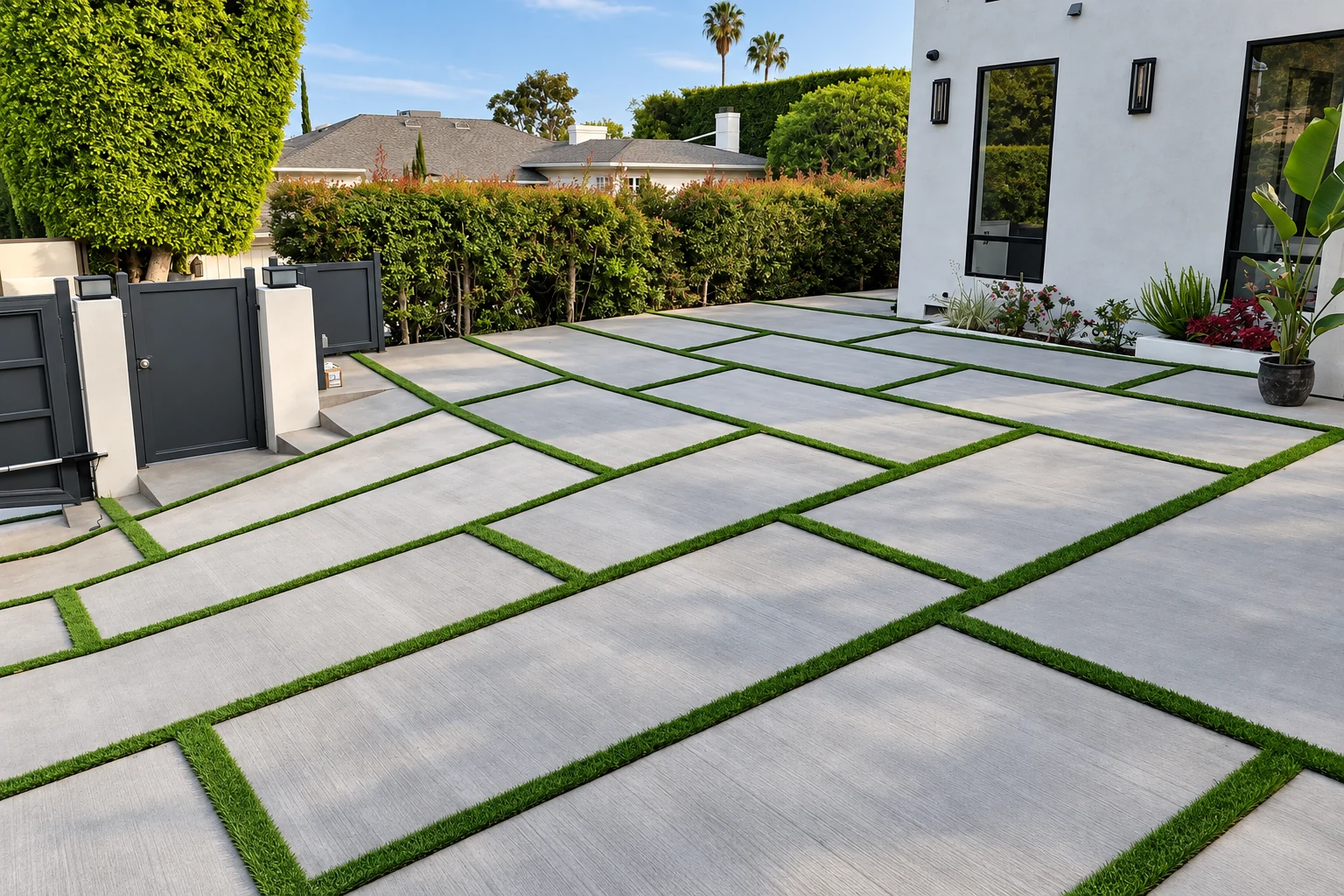
Large concrete patio slabs form a geometric grid with narrow strips of grass between them.

Pasadena as we see it on concrete jobs

Pasadena takes in older neighborhoods the city has designated historic, blocks of postwar houses, newer homes and small apartment and commercial lots, so no two jobs there start quite the same way. Here a concrete job usually means fitting a new driveway, patio, walk or set of steps to a house that's stood for decades. It's the same kind of work we do next door in San Marino and Sierra Madre.

On houses that old, the new concrete has to meet what's already there, like the porch, the garage floor, the property line and the street. That's why I set the layout and the grades to the house first, so the new slab sends water away from it and meets everything that stays at the right height.

Concrete work we do for Pasadena homes and lots

In Pasadena we handle every service on our list, but most of what we do is flatwork, the driveways, patios, walks and garage floors that lie on the ground. We also build steps, pool decks, retaining walls, footings and foundations, and we cut concrete when an old slab has to come out clean. Every job starts the same way, with me on site checking where the water runs and what the new concrete will sit on, and then our own small crew does the work while I run the pour.

  • Concrete driveway building

    Older driveways often crack, sink or pool water once the ground under them has settled. We break out the old slab, dig down to firm ground and pack a new base before we pour.

    Explore service
  • Concrete patio construction

    Patios behind older houses often tip toward the back door after years of settling. We pitch the new slab away from the house and cut control joints so cracks stay in a groove we chose.

    Explore service
  • Stamped concrete services

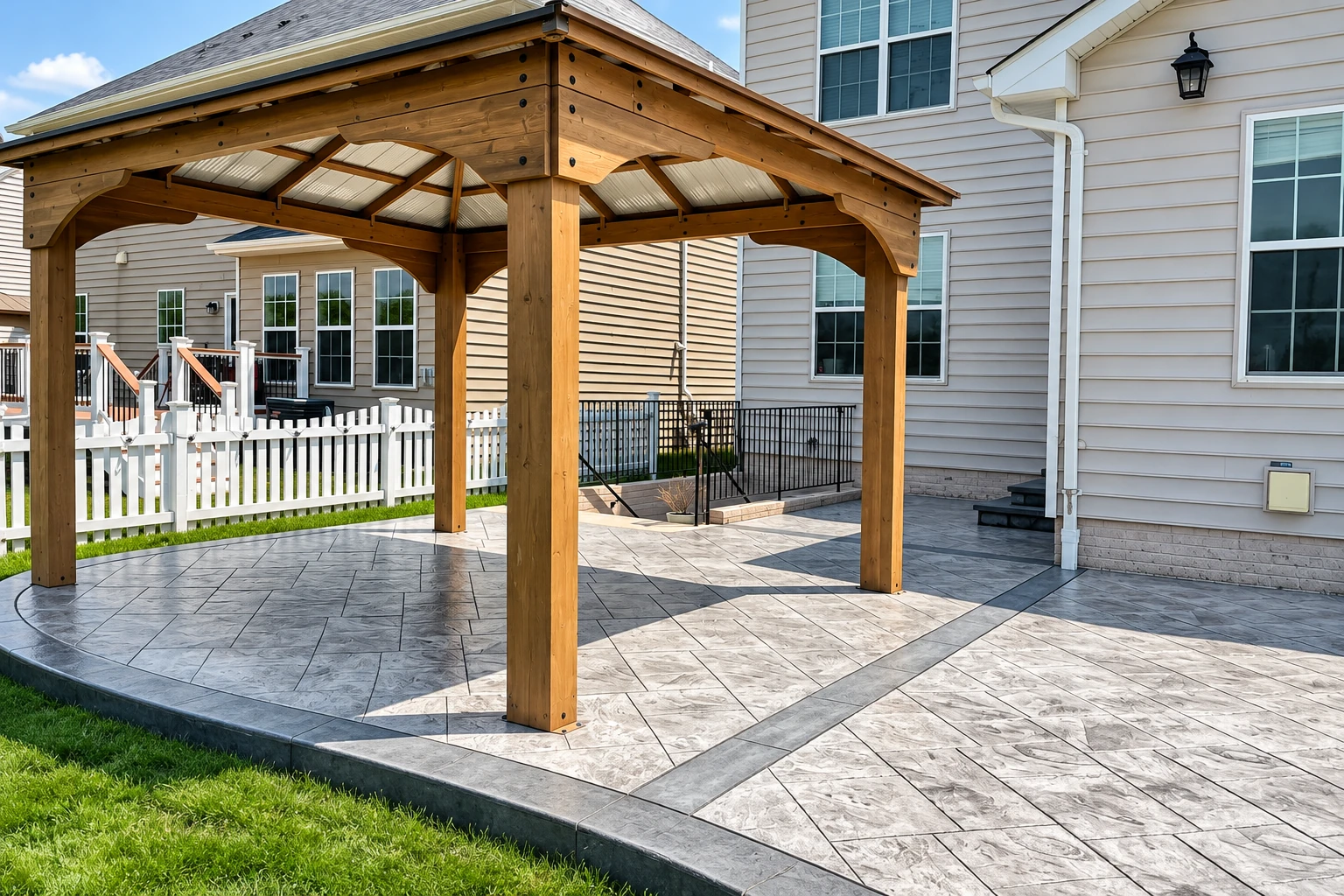
    Homes on older streets often suit a walk or patio that looks like stone or brick. We stamp and color the concrete while it's fresh, then seal it to protect the pattern.

    Explore service
  • Concrete sidewalk building

    Front walks on older lots are often lifted where they meet the porch or the driveway. We pour the new walk with a broom finish, a brushed texture that grips when it's wet.

    Explore service
  • Garage floor concrete

    Detached garages behind older houses often have thin, cracked floors that hold oil and water. We break out the old floor, pack the base and pour a level slab that drains toward the door.

    Explore service
  • Decorative concrete

    Some owners want new concrete that suits an older house instead of plain gray. We use color, texture and finishes picked to fit the house, and we show you samples first.

    Explore service
  • Concrete retaining walls

    Sloped yards often need a wall to hold the soil beside a patio or driveway. We set it on a proper footing and drain the back so water doesn't build up behind it.

    Explore service
  • Concrete floor installation

    Workshops, studios and additions on older lots often need an interior floor that's flat and true. We check what's under it first, then pour and trowel a smooth, level slab.

    Explore service
  • Concrete pool decks

    Decks around older backyard pools often crack, lift or turn slick. We slope the new deck away from the pool and finish it with a texture that grips wet, bare feet.

    Explore service
  • Concrete steps construction

    Front steps on older houses are often chipped, uneven or pulling away from the porch. We form every step to the same height and set the new steps on solid ground.

    Explore service
  • Slab foundation building

    New additions, garages and backyard units often sit on a slab foundation. We build to the engineer's plans and set the rebar, the steel that holds cracks tight, before we pour.

    Explore service
  • Foundation installation

    Additions and rebuilds on older houses need foundation work that meets what's already there. We dig and form to the engineer's design and check it twice before the truck arrives.

    Explore service
  • Concrete parking lot building

    Small apartment buildings and shops often have worn lots that crack and hold water after rain. We build a deeper base for daily traffic and slope the lot so it drains.

    Explore service
  • Concrete footings

    Walls, posts and small structures on older lots need footings, the buried concrete that carries their weight. We dig them to the size and depth the plans call for, down to firm ground.

    Explore service
  • Foundation raising

    Some older houses have a corner or slab that has sunk, so doors stick and floors run downhill. We find the cause first and bring in an engineer when the house needs one.

    Explore service
  • Concrete cutting

    Older slabs often need a clean opening for a drain line, a door or a section coming out. We saw along marked lines so the concrete that stays keeps a straight, square edge.

    Explore service

Working in Pasadena: permits, licenses and what moves the price

Pasadena runs its own permit office and its own business license, and both affect when a job can start. Here's how those steps work, what you can check about any contractor, and what moves the price.

Who issues permits and what to check

Building permits for most construction in Pasadena come from the city's Permit Center, which takes the applications and fees. Even work without a building permit may still need a zoning permit, and new structures and room additions go through plan review, where the city looks over the drawings. Those steps come before a start date, so a slab for an addition usually starts later than a patio.

Two things are worth checking on any contractor you hire there. One is a California contractor license, which Pasadena's permit staff look up with the state board, along with the contractor's workers' compensation insurance. The other is a current City of Pasadena business license, which the city requires of every business working inside city limits and asks contractors to show when they pull a permit.

  • We help you find the right city or county office for your address.
  • We help put together what that office asks for before you apply.
  • We ask the office about permits before we set a start date.

What moves the price and the timing

Price usually comes down to the size of the job, how much old concrete has to come out, and how much digging and base work the ground needs before we pour. Tight access means more hand work, and stamping or color costs more than a plain broom finish. It's the same list we price from out in West Covina.

The schedule starts with the city steps above, then turns on the weather and on curing, the wait while new concrete gains strength before it can take feet or tires. You'll be able to walk on a new slab well before you can drive on it. Your own figure and timing come from the estimate at your property.

  • Hauling away old concrete adds labor and dump fees to the job.
  • Rain in the forecast can push a pour back until the ground dries.
  • The written estimate spells out what the price includes.

Get a free on-site estimate for your Pasadena concrete job

Send the form or call (323) 471-6288 and we'll reply within one business day by phone or email. I come out to your Pasadena property myself, measure, take photos and write up what the price includes. The estimate is free, and there's no obligation to go ahead.

(323) 471-6288

What we see on Pasadena houses, yards and driveways

Pasadena's housing runs from older homes on established streets to newer builds, and the ground around them tells us a lot. These are conditions we plan around when we lay out and price a job there.

  • Old grades that drain inward

    Years of settling can leave an old patio or walk tipping back toward the house, so rain pools against the foundation instead of running off. We check where the water goes before we set any forms and pitch the new concrete to fall away from the walls.

  • Tree roots under walks

    Big, older trees shade a lot of established streets, and their roots can lift walks and crack driveways from below. We find where the roots run before we dig, and if a large root is in the way, we talk it over with you before anything gets cut, since that can hurt the tree.

  • Narrow drives to back garages

    Many older houses have a long, narrow driveway running back to a detached garage, with little room for a concrete truck. When the truck can't reach the pour, we pump the concrete or wheel it in, and that extra handling shows up in the plan and the price.

  • Sloped yards near the foothills

    Parts of Pasadena climb toward the foothills, and sloped yards there need steps, walls or a stepped patio to be usable. Water moves faster across a slope, so we plan where the runoff goes before anything is formed, because water running under a slab washes out the base it sits on.

  • Driveways patched many times

    A lot of the driveways we break out have been patched, extended or poured over more than once, with a different base under each piece. Laying new concrete on that mix usually brings the old cracks right back, so we take it all down to firm ground and start fresh.

How we run a concrete job from estimate to pour

I started this business in Temple City in 2017 after learning the trade on a small crew. These are the practices we bring to every Pasadena job, and the reasons behind each one.

We get the base and grades right first

When a budget gets tight, the base is usually the first thing people want to cut, because nobody sees it once the slab is down. The subgrade, the ground the slab sits on, has to be dug out to firm soil and packed, not just raked level, or the concrete settles right along with the dirt underneath it.

So if something has to give, I'd rather simplify the finish than skimp on the base. A plain slab on a solid base holds up, and a fancy finish on a soft base usually ends up torn out. I check the layout and the grades twice before the truck shows up, because once it's poured, the only fix for a bad grade is tearing it out.

  • Same person from estimate to pour

    I come out to every estimate myself, and the work is done by our own small crew with me running the pours. The person who measured your driveway and checked your grades is the one standing there when the concrete truck pulls up.

  • Fully licensed and insured

    We're fully licensed and insured, and I'd rather you check that than take my word for it. Look us up the same way you would any contractor working on your house, using the state and city checks covered above, before you sign anything.

  • Honest talk about new cracks

    A few fine cracks in new concrete are normal, and I'd rather tell you up front than have it catch you off guard. We keep them tight with a packed base, rebar where the slab needs it and control joints cut on time. Your satisfaction, guaranteed.

  • When it's an engineer's call

    Some questions aren't mine to answer, like whether a sunken slab needs an engineer or whether your job needs a permit. I'll tell you when that's the case and who to ask, instead of guessing. Call (323) 471-6288 to talk through your job.

Common questions about concrete work in Pasadena

Here are straight answers to common questions about permits, licenses, cost and timing for concrete work in Pasadena. If yours isn't covered, bring it to the estimate and I'll answer it there.

Do I need a permit for a new concrete driveway in Pasadena?

In a residential zone, yes, at least a zoning permit, because Pasadena lists driveways and other paving among the work that needs one to confirm it meets the city's zoning rules. Some concrete work also needs a building permit, which comes through the Permit Center covered above.

How do I know if my concrete contractor needs a California license for a Pasadena job?

Your contractor needs a state license if the project needs a building permit, uses employee labor, or comes to $1,000 or more in labor and materials, under the rules of the Contractors State License Board. If you pull the permit yourself as the owner and then hire unlicensed workers, the city says you have to provide their workers' compensation insurance and take on other liabilities. The Permit Center highly recommends hiring a licensed contractor.

What adds to the cost of a concrete driveway in Pasadena?

Breaking out and hauling away the old driveway is usually the biggest extra, along with any digging needed to get the new slab down to firm, packed ground. If your job needs a city permit, its fees are paid at the Permit Center with the application, so they're part of the cost too. Ask for the estimate and I'll show you what's driving your number.

How long after a pour can I drive on a new concrete driveway in Pasadena?

Well after you can walk on it, because a car's weight on young concrete can crack it before it has cured enough to carry the load. I'll give you the walk-on and drive-on days for your slab at the estimate and again the day we pour. On hot Pasadena days we pour early in the morning, since midday heat can leave the top weak and dusty.

Service areas

We're based in Temple City and work across the cities around it, including the ones listed here. If your city isn't on the list, call (323) 471-6288 or send the form and ask.

Ask about your location
(323) 471-6288Get an estimate