Concrete Parking Lot Building in Temple City CA - a lot built for the traffic it carries
Cracked, puddled or worn-out parking lot? We pour concrete pavement built to your engineers' drawings and sized for the cars and trucks that use it.
What goes into building a concrete parking lot in Temple City?
Concrete parking lot building in Temple City means forming, pouring and finishing concrete pavement to a design your engineers set, so the lot carries its cars and trucks and sends rain where it should go.
Most calls start with an old lot that's cracked, sinking in spots or holding water after rain, or with a new building that needs parking. The price moves with the lot's size, the thickness the engineers call for, how much old pavement comes out and how many trucks use the lot. The schedule turns more on design and city review than on pour day, and your written estimate shows what your price includes.
At Meridian Temple City Concrete we're fully licensed and insured, and I'm straight with people about cracks. A few fine ones in new concrete are normal, and the base work and the joints are how we keep them tight.
- We dig out and pack the subgrade, the ground the slab sits on, before any forms go up.
- Control joints get cut on time, so the cracks concrete makes run along lines we picked.
- Slopes, curbs and drains follow the engineer's plan, so rain leaves the lot instead of pooling.
What happens after you call us about a parking lot?
A parking lot involves more paperwork than a driveway, so the steps below include the city's part as well as ours. I'm on site for the estimate and at every pour.
Call or send the form
Call (323) 471-6288 or use the form, and have the lot size in square feet, your car and truck counts and the site's use handy. We get back to you by phone or email and set a time for me to come out.
I measure and write it up
I come out myself, measure, take photos and look at how water leaves the site now. You get a written estimate that spells out the work and what the price includes, so you can compare bids line by line.
Clear the city, then pour
We find the office that covers your address before we pick a start, and in Temple City plan review takes two weeks or less, with another round if the plans need corrections. On pour day I check the forms one more time and run the pour with our own crew.
Walk the finished lot together
When we're done I walk the lot with you and go over how to care for it. Curing is the wait while the concrete gains strength, so we tell you when it's ready to take cars.
Concrete paving, forming and finishing work up close
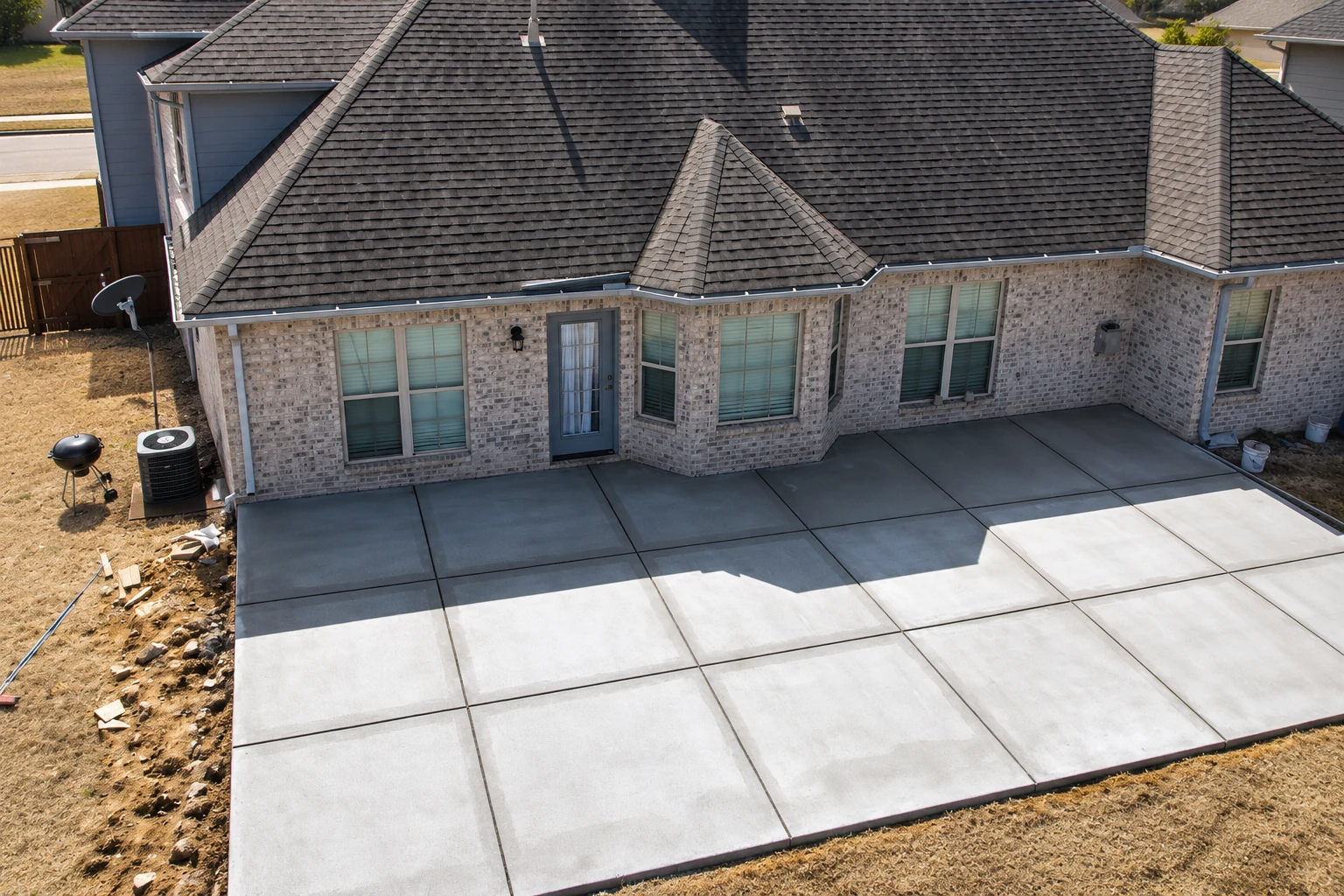
These photos show the kind of concrete work a parking lot involves, from forms and base to finishing and cut joints. They're general trade photos, so call us when you want to talk through your own lot.
Raised concrete patio beside a dark brick house, with a broad smooth slab, a small step, and a low retaining wall.
Broad gray concrete steps with embedded lights lead to a covered porch with a red door, bordered by flowering shrubs.
Wide concrete steps cross a landscaped garden, joining textured concrete walkways beside a house.
Wide concrete patio and steps beside a tan house, with a pergola and outdoor seating in the background.
Small concrete patio with outdoor chairs and tables sits below a raised wooden deck beside a gray-sided house.
Stamped concrete patio with a wood-grain pattern, surrounding chairs and a circular stone fire pit.
Get a written estimate for your parking lot
Send the form and we'll reply within one business day by phone or email. I'll come out for a free on-site estimate, measure and take photos, and there's no obligation to go ahead.
(323) 471-6288Questions about building a parking lot in Temple City
These are the questions owners ask most before a parking lot job in Temple City. The answers draw on the city's rules and national pavement guidance, and your engineers and the city have the last word on your lot.
How do I get a new parking lot approved in Temple City?
The city's Planning Division approves the project first, and then a paid plan check application opens the online building plan review. Once a permit is issued it's good for six months and can be extended, with inspections at stages of the work. Commercial lots also have to meet the state's accessibility rules set by the Division of the State Architect.
Who decides how thick a concrete parking lot should be?
A geotechnical engineer, the soils specialist, recommends the thickness based on how well the ground under the lot supports the pavement. National trade guidance has a civil engineer set the concrete strength, joints and drainage, and has you, the owner, define the loads, so a clear count of cars and trucks helps both engineers.
Does a bigger parking lot change the stormwater rules in Temple City?
Yes. Under the city's low impact development manual, commercial or industrial site work that disturbs more than 500 square feet of soil has to build one or more systems for handling rain into the design and show them on the plans, and new lots of 5,000 square feet or more typically also fall under a regional storm sewer permit from the California Regional Water Quality Control Board. The manual accepts pervious pavement as one of those systems but says it can be complex to design, install and maintain, and it requires a published design standard, so confirm the current rules for your lot with the city.
What is the best way to build a parking lot for delivery trucks?
Build it to an engineered design that knows your daily truck count, because national guidance adds dowel bars at the cross joints once heavy traffic reaches about 100 trucks a day. Share that count early, since it decides whether the joints need that extra load transfer.
How much does a concrete parking lot cost to build in Temple City?
There's no fair number until I've measured your site, because lots vary so much in size, thickness and drainage work. Tearing out an old lot, the stormwater systems a larger lot may need and the city's plan check fee, paid when the plans go in, all add to the total. Your written estimate lists each item so you can see where the money goes.
Who is licensed to build a concrete parking lot in California?
A contractor licensed by the Contractors State License Board as a C-8 Concrete contractor, a class that covers forming, pouring and finishing pavement and flat concrete. Every active C-8 contractor must carry workers' compensation insurance or a valid self-insurance certificate, even without employees, so ask each bidder for proof, us included.
Concrete parking lot building in Temple City and nearby
Temple City's Building & Safety office reviews the plans, issues permits and inspects the work, and we help you gather what it asks for. We're based here and build in Rosemead, El Monte and other cities nearby.